|
|
Encaustics - Bee´s wax painting |
"SEE THE WHITE LILIES OF THE COUNTRYSIDE" period.
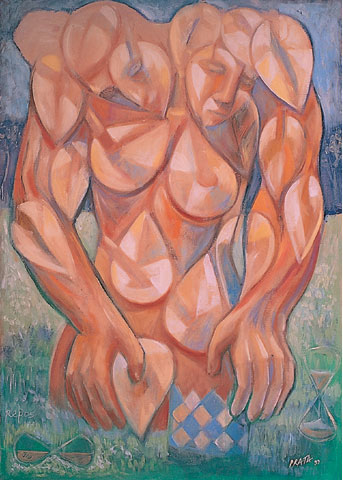
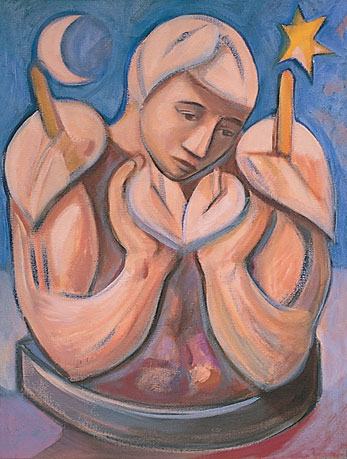
There are two ways of painting with bee wax; the hot way (fusion) and the cold way (saponification of the wax). In using these techniques, the painting becomes watertight due to the beeswax contained in the paint mixture. This gives the work a kind of resistance incomparable to other techniques. It is even easier to use certain pigments that are usually rejected by oil and fresco combinations. There are very few artists who adopt this technique due to a favoritism towards the oil technique and more recent mediums. One might suggest that Encaustic painting is superior to oil painting, as it is surely more water resistant than oil. You can even paint textures safely without gloss. Mr. Prata is presently one of the very few Brazilian artists who uses and teaches this technique.
"Couple"
Small part of the painting techniques DVD.
|
|
 |
Prata´s Art Studio - Brazil - Tel: 55 11 4035-2057 - Mobile 55 11 99597-0275 - e-mail: artista@sergioprata.com.br |